

Whole House Power Surge Protection
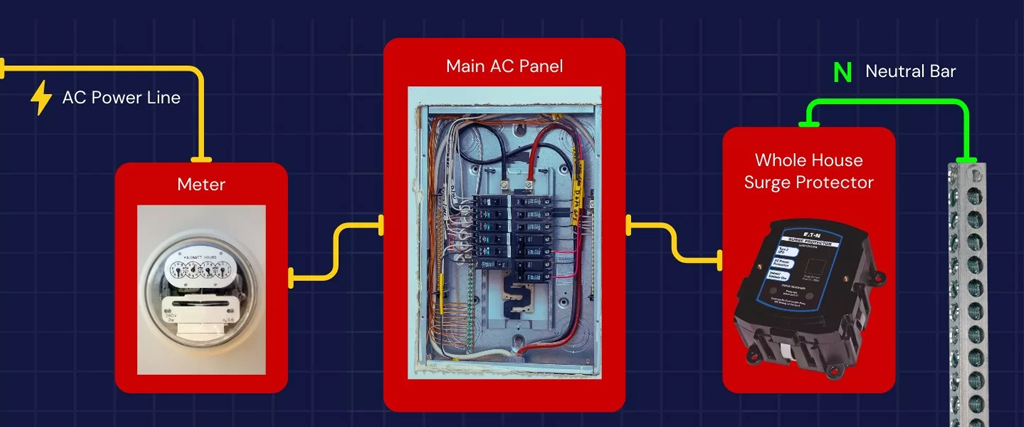
A whole house surge protector is an appliance installed on the main electrical service panel (or meter box) to protect the entire electrical system of a home against power overflows. Rather than inserting single appliance surge protectors, one typically plugs a whole-house surge filter at the head of power supply, and this device blocks abnormal voltages in transit to the wiring thus preventing spikes of very high voltages in reaching appliances of a sensitive nature, thereby avoiding damage and consequential degradation of devices.
Whole house surge protectors offer systemic safety, shielding all the wired in the home, such as lighting, changes to HVAC, refrigerators, computers, entertainment systems, medical equipment and other similar items that are included. Contrary to point-of-use surge strips which only shield one outlet or another area of the house, whole house protectors offer a system wide level of safety.
Why Do You Need a Whole House Surge Protector?
1. Frequent Surges and Transients
Lightning hits are not the only causes of power surges (however dramatic). Transients Electricity transients can occur whenever switching on a large appliance (such as an air conditioner or washing machine), or as a result of faults in the electrical installation, or power pole switching. Eventually, such small surges destroy electronics, reduce insulation, and reduce the lifespan of devices – without always a visible result.
2. High Value of Modern Electronics
The contemporary house is crowded with gadgets and electronics of great delicacies, such as smart TV systems, home automation, computer systems, inverting renewable energy, security cameras, and the like. Such devices will run into hundreds or thousands of dollars. One major rush forget event may represent damage or destruction of costly gear. Whole house surge protector installation is a comparatively low expenditure going through substitute broken apparatus.
3. Insurance and Warranty Requirements
Certain warranties or home insurances policies might involve the use of surge protection in an effort to cover the electrical damages. System level surge protection can assist in fulfilling such requirements and enhance claims in case of damage.
4. Peace of Mind
Writing in paragraphs and appreciating the fact that there exists a first line of defense against hazardous voltage spikes in the entire electrical system of your home is comforting. There is also no need to connect a surge strip in each of the rooms; your protector of the entire home serves zipe.
Benefits of Whole House Surge Protectors
a) Comprehensive Coverage
Instead of offering protection to your individual devices, the entire house unit secures your entire electrical setup. It implies that all the stores, all the built-in appliances, and all the hardwired gadgets are automatically benefited.
b) Reduced Wear and Tear
Minor, continuous discharge of any magnitude can wear electronics faster. These surges are diverted by a protector thus increasing the lifespan of appliances and components associated with the electric circuit.
c) Lower Repair and Replacement Costs
Making a surge often requires significantly less money to dissolve one whole house design often than it does to repair several appliances, computer Intel in home Theaters or heating/cooling systems, after a surge.
d) Improved Safety
Sudden increase in voltage may lead to sparks, fire or even insulations breaking down. Surge protection helps eliminate the potential of vulnerability to electrical hazards by restraining algebraic onslaughts to profitable levels.
e) Coordination with Point-of-Use Devices
Whole house surge protecting does not necessarily exclude the use of surge strips or the UPS (uninterruptible power supplies) when it comes to very sensitive electronics; it is simply a soldier of first line, and is used alongside point-of-use equipment to reduce the amount of stress that they are subject to.
f) Low Maintenance and Longevity
Higher quality device is hardened, can be maintained with minimum efforts and can last several years. There are models that have indicators or displays that inform homeowners that they need replacing.
Key Reasons to Choose a Professional Installer
Whole house surge protector is not a simple DIY project to install. The key factors and reason behind choosing considerations when selecting a provider would be listed below:
1. System Assessment & Customized Design
The electrical design of each home, panel setups and loads are different. To select and to locate the surge protector in the optimum setting that guarantees the highest level of functioning and adherence to all electrical regulations, a professional installer would evaluate your wiring system, load flow/load, and grounding system.
2. Quality Components and Certification
Not all have equal surge devices. Brand trusted products (UL, IEC and local equivalents) are certified and provide the suitable protection, well measured response times, and also fail-safe modes. A reliable installer would install with quality parts that are supported by warranty and certifications.
3. Proper Grounding and Bonding
Surge protectors need to be tied to a low resistance ground/bonding system to operate properly. Only a skilled electrician can guarantee proper grounding that is better than the safety standards because in other cases the use of the plug-in electric protector will be useless and could result in the development of problems.
4. Code Compliance and Permits
Compact placement, spacing, interrupting rating, clearance and labeling are usually controlled by electrical codes and local regulations. A professional installer makes certain that the installation is made according to all the requirements and also secures the required permits or inspections.
5. Warranty and Support
Experienced installers usually giving warranty on workmanship as well as that of manufacturers of the device. You even have a guaranteed money back policy. After sales services such as post-installation check and monitoring services are also available in many installers.
6. Safety and Liability
The work on main electrical paneling is connected with high voltages and the threat of injury, damage of properties. A registered tradesman is well prepared with equipment, knowledge and insurances to handle any risk laid on their hands. Selecting a professional assists in reducing the liability of installer and the homeowner.
What to Look for in a Whole House Surge Protector Provider
-
Strong local reputation and positive customer reviews
-
Licensed and insured electricians
-
Use of certified surge protection devices
-
Clear documentation, testing, and sign-off after installation
-
Transparent pricing, breakdown of costs (device + labor)
-
Knowledge of coordination with downstream point-of-use protection
-
Ongoing customer support and maintenance plans
Steps in the Installation Process
-
Initial consultation & site survey — assessing panel layout, ground system, expected load.
-
Device selection — choosing the appropriate surge protector class, voltage rating, current capacity.
-
Power shutdown & safety prep — turning off main breaker and taking safety precautions.
-
Connection to panel & grounding — installing between phase(s) and neutral/ground, with short leads, proper hardware.
-
Testing & verification — measuring continuity, ground resistance, using indicators.
-
Documentation & handover — providing test results, user manual, warranty info.
